Personal


Past postings are numbered in the order they went online, with the most recent postings located immediately below the Table of Contents.

To go directly to stories without scrolling, click on the highlighted phrases following the numbers.

Weekly postings are published by Thursday.

262. Crafting the Considerate House

261. West Marin remembers Duane Irving

260. The art of boating

259. Firefighters in action

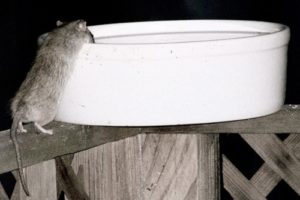
258. Do you like coyotes and bobcats? How about rats?

257. Los mapaches con cacahuates; también fotos de los cuervos y venados

256. Proposal for ceasefire in West Marin ‘newspaper war’

255. The young creatures of summer

254. Eli’s coming — causing momentary dismay at The Point Reyes Light

253. Under the volcano and in the eye of the storm — a firsthand account

252. The duel between The Point Reyes Light and The West Marin Citizen

251. Santa Muerte and El Cadejo

250. Wildlife around my cars on the Serengeti Plain of West Marin

249. A big Western Weekend Parade in li’l old Point Reyes Station

248. 4-H Fair and Coronation Ball keep alive Western Weekend’s agricultural traditions

247. A tail for West Marin to bear in mind this Western Weekend

246. Point Reyes Light sells and will incorporate as a nonprofit

245. Point Reyes Station area blackout rumored to have been sparked by bird

244. Planned Feralhood desperate for a new home

243. John Francis takes a walk down under

242. A day in a small town

241. Point Reyes Station’s notorious curve is scene of yet another vehicle crash

240. The Mother Goose method for getting rid of thistles

239. A benefit so that handicapped kids can go rafting

238. Where angels fear to tread

237. The Chronicle, hang gliders, and horses

236. Crowd celebrates 80th birthday of Marshall artist-political activist Donna Sheehan

235. A classic revisited

234. Nature celebrates spring

233. More on diplomatic news we’ve been following

232. Sportscar flies off embankment; no one hurt in miraculous landing

231. A chat with the Trailside Killer

230. Life and death on my hill

229. Valentine’s Fair raises money for Haiti relief

228. Historic irony as milk truck overturns in Marshall

227. Encouraging my bodhisattva possum on her path to enlightenment

226. Benefit for Haitian earthquake survivors filled with mixed emotions

225. What drought? Nicasio Reservoir overflows

224. Disconcerting standup reporting

223. The storms begin; schools close; a near miss at my cabin

222. Spare the rodent (or rabbit) & spoil the diet

221. Lookin’ out my backdoor: some of my favorite wildlife photos

220. Careening through the holidays

219. Chileno Valley journalist working in Abu Dhabi brings new wife home for visit

218. Just what would Mayberry be like on acid?

217. The foxes of downtown Point Reyes Station

216. Interpreting dreams

215. Let’s talk turkey

214. You’ll Never Walk Alone — an unlikely story

213. A wistful walk on the bottom of Nicasio Reservoir

212. Progress in the backyard peace process

211. John Francis leaving; 4 other artists turn pages but sticking around

210. What we inherit

209. Over 200 show up at fundraiser to help pay injured ad manager’s medical bills

208. A community helping one of its own

207. A country mouse in the Tenderloin

206. News of the week reported through pictures

205. Update on injured ad manager of West Marin Citizen; benefit planned; and will there be a race?

204. Startling weather; amazing stepdaughters

203. Talented-animal tales

2o2. Saga of The West Marin Citizen ad manager’s recovery spreads around the globe — not always accurately

201. And you were there

200. Hospitalized ad manager of West Marin Citizen coming home; friends volunteering to provide meals

199. Scenes from the Inverness Fair

198. Great progress for injured ad manager of The West Marin Citizen despite problems with convalescent hospital

197. Thieves use ruse to clean out till at Station House Gifts

196. Anastacio’s Famous BBQ Oyster Sauce goes on sale

195. A hillside of wildlife

194. Kaiser Permanente’s ‘Sicko’ machinations shock injured ad manager of The West Marin Citizen

193. Immobilized by multiple injuries, ad manager keeps selling from hospital bed

192. All creatures feathered and furry

191. The wildlife of summer around my cabin & an update on Linda Petersen’s condition 

19o. West Marin Citizen advertising manager hurt in crash; her popular dog Sebastian dies

189. Sunday’s Western Weekend Parade

188. The Western Weekend Livestock Show

187. Western Weekend parade will be Sunday despite reports to the contrary

186. The purple couch beside the road

185. A funny thing happened at the car wash Friday & other odd events

184. My brush with a badger

183. Scientists find no evidence oyster farm harming Drakes Estero; more likely restoring it

182. Why bottom of Drakes Estero can never become part of a wilderness area

181. Badger, Ratty, and the sensual raccoon

180. ‘And how the wind doth ramm!/ Sing: Goddamm — Ezra Pound

179. A tailgate gallery of bumper-sticker humor; Point Reyes weather both Arctic & tropical

178. Crowd in Inverness Friday calls for reviving park’s Citizens Advisory Commission

177. Flying over Northwest Marin

176. Spring meditations in a Miwok cemetery concerning the news of West Marin.

175. Two warning signs of Spring

174. Tomales may be little but it’s lively

173. Doe stalks cat; raccoon emulates Scripture — for the rain it raineth every day

172. Three-year drought comes to a symbolic ending as Nicasio Reservoir overflows

171. Pot busts at my cabin — again

170. Happy Valentine’s Day (as it’s evolved)

169. Blogging about blogging

168. Thinking about words

167. Point Reyes Station celebrates President Barack Obama’s inauguration

166. A reader in Ghana

165. The bittersweet story of a hardy little tree

164. A parting look at 2008

163. Blackout hits Tomales Bay area

162. Nature’s Two Acres Part XXXVIII: Way Out West in West Marin

161. Chileno Valley Ranch as depicted by a rancher-artist who lives there

160. Nature’s Two Acres XXXVIII: This time it’s a tale of two bobbed cats

159. Thanksgiving in Point Reyes Station

158. Nature’s Two Acres Part XXXVII: a bobcat at my cabin

157. Quotes Worth Saving II

156. Nature’s Two Acres Part XXXVI: The migrating birds of fall; or ‘Swan Lake’ revisited

155. Election night euphoria

154. The fun and anxiety of preparing for a disaster

153.  Porky Pig, Demosthenes, Joe Biden, and ‘K-K-K-Katy

152. The political zoo.

151. Nature’s Two Acres Part XXXV: Mr. Squirrel

150. A coyote at my cabin

149. Preparing for the fire season

148. Telling the Raccoon ‘Scat’

147. Faces from the weekly press

146. Tomales, Tomales, that toddling town

145. How park administration used deception & sometimes-unwitting environmentalists to harass oyster company with bad publicity

144. Nature’s Two Acres Part XXXIII: Photographing wildlife indoors and out

143. What government scientists elsewhere had to say about the park’s misrepresenting research to attack oyster company

142. Landscape photos & paintings in Stinson Beach

141. What’s in the Inspector General’s report on the park that newspapers here aren’t telling you

140. Point Reyes National Seashore Supt. Don Neubacher seen as ’scary’

139. A demonstration to save Point Reyes National Seashore deer; park administration dishonesty officially confirmed

138. The good, the bizarre, and the ugly

138. Alice in ‘Wilderness

137. Nature’s Two Acres Part XXXII: The first raccoon kits of summer

136. Nature’s Two Acres Part XXXI: The pink roses of Point Reyes Station

135. Nature’s Two Acres Part XXX: Baldfaced hornets

134. Scenes from my past week

133. Artist Bruce Lauritzen of Point Reyes Station draws a crowd for opening of exhibit

132. Kite day at Nicasio School

131. Sunday’s Western Weekend Parade in photos

130. Early projections hold: Obama, Woolsey & Kinsey win… Leno easily bests Migden & Nation

129. Western Weekend’s 4-H Livestock Show fun — but smaller than ever

128. Humane Society of the US says National Seashore claims about deer contraception are misleading

127. Lt. Governor John Garamendi joins battle to save fallow & axis deer in Point Reyes National Seashore

126. Nature’s Two Acres Part XXIX: Cold-blooded carnality… Or, why be warm blooded?

125. Nature’s Two Acres XXVIII: The first fawns of spring

124. The Beat Generation lives on at the No Name Bar

123. ‘Still Life with Raccoon

122. Nature’s Two Acres XXVII: Animals about town.

121. Newspaperman from Chileno Valley describes his life in the United Arab Emirates

120. Point Reyes Station and Inverness Park demonstrators call for a pedestrian bridge over Papermill Creek

119. Seeing history through newsmen’s eyes…. or the pen is mightier than the pigs

118. Five Faces of Spring

117. Supervisor Steve Kinsey defends further restrictions on woodstoves in West Marin

116. Prostitution in New York, Reno, and Point Reyes Station

115. A country without the decency to ban torture

114. National Seashore’s slaughter of deer traumatizes many residents here; ‘we demand a stop’

113. A tale of Kosovo, West Marin, and a bored battalion of Norwegian soldiers

112. Dillon Beach sewage spill update

111. ‘Drive-by journalism’

110. Sewage spills into ocean at Dillon Beach

109. Nature’s Two Acres XXVI: Which came first, blacktail or mule deer? Hint — their venison is oedipal

108. Nature’s Two Acres XXV: Talking turkey

107. Here’s hoping ‘the goose hangs high this Thursday for Valentine’s Day

106. Signs of bureaucratic contamination

105. A final thought about the Caltrans worker who just did his job — and saved the day

104. Statewide campaign to legalize hemp and marijuana comes to Point Reyes Station

103. Heavy news media presence briefly halts axis-deer slaughterin the Point Reyes National Seashore

102. Storm damage bad but could have been tragic

101. Nature’s Two Acres XXIV: Buffleheads, Greater Scaups, and the 16.6 million wild ducks shot annually

100. Lawsuits against and by Robert Plotkin settled out of court

99. Nature’s Two Acres XXIII: Bambi, Thumper, and Garfield

98. Governor Schwarzenegger’s proposal to close Tomales Bay State Park to save money could prove expensive

97. Old Christmas trees, wild turkeys, and the famous cat-and-rat scheme

96. Blackouts, newspapers in the news, and poetic frustration on the prairie

95. Hurricane-force wind & heavy rain take heavy toll on West Marin

94. Marin County gets a bum rap from itself

93. ‘Eco-fascism in the Point Reyes National Seashore

92. Guess who came to Christmas dinner

91. Yuletide greetings from Santa Claws

90. Assemblyman Jared Huffman’s ominous mailer

89. Nature’s Two Acres XXII: They’re hundreds of times more deadly than cynanide… and headed this way

88. Non-native species stops traffic in Point Reyes Station

87. Blackouts bedevil Point Reyes Station area

86. Urban legends

85. Nature’s Two Acres XXI: Coyote influx benefits some birds around Point Reyes Station

84. Winter Moon Fireside Tales — an undiscovered gem draws only four ticketholders opening night (but more for second show)

83. Striptease in Point Reyes Station… well, sorta

82. Our Lady of the Chutzpah — the many faces of State Senator Carole Migden

81. Stefanie Pisarczyk (AKA Stefanie Keys): a woman of two worlds

80. Point Reyes Station’s ‘Path of Lights’

79. Lessons to be learned from the oil spill

78. Nature’s Two Acres Part XX: Where coyotes howl and raccoons roam free

77. West Marin Community Thanksgiving Dinner celebrated in Point Reyes Station’s Dance Palace

76. Giving thanks for an abundant harvest

75. Being a Gypsy isn’t enough; KPFA fires host criticized for not being a ‘person of color’

74. Nature’s Two Acres Part IXX: ‘Things that go bump in the night’

73. Point Reyes Station pharmacist decries health-insurance practices

72. Farm Bureau president quits; defends independence of wife who disagrees with his political position

71. Ship hits Bay Bridge; spilled oil drifts out Golden Gate and mires birds on West Marin coast

70. California photo book’s release celebrated with gala on Inverness Ridge

69. Coastal Post’s December issue to be its last, assistant editor says; publisher contradicts her

68. West Marin’s ‘Mac Guru’ leaving town — a friend with a knack for surviving

67. One last warm weekend before the season of darkness

66. Ranching matriarch Hazel Martinelli dies at 101

65. Nature’s Two Acres Part XVIII: Seasonal sightings

64. White House Pool: a public park where management listens to the public

63. Tuesday’s Marin County Farm Bureau luncheon for politicos

62. Hawks on the move

61. Point Reyes Station’s Hazel Martinelli celebrates 101st birthday with party at son’s deer camp

60. Vandals dump sewage at West Marin School

59. Paving Point Reyes Station’s main street at night

58. Bolinas firehouse and clinic opening party Sunday

57. Nature’s Two Acres XVII: As seen by an old, almost-blind dog

56. Despite public-be-damned management, it’s still a beautiful park.

55. Language, politics & wildlife

54. Truth becomes an endangered species at the Point Reyes National Seashore.

53. ‘Possums,’ a sequel to the musical ‘Cats’

52. The KWMR/Love Field ‘Far West Fest’

51. Quotes Worth Saving & the Inverness Fair

50. Watching the Point Reyes National Seashore obliterate cultural history

49. Congress sees through Point Reyes National Seashore claims

48. Music, wildlife, and the cosmos

42. Garbage in, garbage out

41. 76-year-old Nick’s Cove reopens

40. What we didn’t celebrate on the Fourth of July

39. Ship’s flare or meteor

38. The death of a salesman: Andrew Schultz

37. Preventing fires at home while The Point Reyes Light feels the heat

36. Monday’s demonstration against The Point Reyes Light

35. Inverness Park fire Friday razes art studio

34. Western Weekend retrospective; anonymous satire of Point Reyes Light distributed at parade; Light’s use of unpaid interns may run afoul of labor laws.

33. Sunday’s Western Weekend parade and barbecue

32. Many fail to find Western Weekend livestock show; a new newpaper debuts in West Marin; The Point Reyes Light reports a former bookkeeper is in jail on embezzlement charges.

31. Nature’s Two Acres Part XVI: A gopher snake & other neighbors

30. New newspaper to be published in West Marin

29. Mermaids, cows, Horizon Cable, and Russia’s Internet war on Estonia

28. Nature’s Two Acres Part XV: ‘Among animals…one finds natural caricatures.’

27. Nature’s Two Acres Part XIV: ‘The world, dear Agnes, is a strange affair.’

26. Sheriff Bob Doyle ’stays the course’ despite blunder and gets county government sued.

25. Nature’s Two Acres Part XIII: ‘Who’s the Head Bull-Goose Loony Around Here?’

24. Nature’s Two Acres Part XII: April showers ‘cruel’ with ‘no regrets’

23. Nature’s Two Acres Part XI: The perky possum

22. Former Point Reyes Light columnist John Grissim, the late pornographer Artie Mitchell, Brazilian President Lula and the advent of orgasmic diplomacy

21. Nature’s Two Acres Part X: ‘Nature Red in Tooth and Claw’

20. Nature’s Two Acres Part IX: Point Reyes Station’s blackbirds

19. Nature’s Two Acres Part VIII: ‘Mice & rats, and such small deer’

18. The Gossip Columnist

17. Saying Yes to Change: A former Point Reyes Station innkeeper finds true joy by moving in with a working-class family in a poor neighborhood of San Miguel de Allende, Mexico.

16. The Bush Administration at Point Reyes Part II: Whatever happened to the Citizens Advisory Commission to the GGNRA & Point Reyes National Seashore?

15. The Bush Administration at Point Reyes: Part I

14. Marin supervisors refuse to tilt at McEvoy windmill

13. Nature’s Two Acres Part VII: Rats v. dishwashers

12. Nature’s Two Acres Part VI: How Flashing Affects Wildlife

11. Nature’s Two Acres Part V: By Means of Water

10. Bankruptcy court trustee lets Robert Plotkin hold onto some of his Ponzi-scheme ‘profits’

9. Big Pot Busts at My Cabin

8. Storm-caused fire razes Manka’s Lodge and Restaurant in Inverness

7. Nature’s Two Acres Part IV: Christmas turkeys & where the buck stopped

6. Nature’s Two Acres Part III: Insectivores and Not

5. My background: Biographical information on newspaperman Dave Mitchell

4. Nature’s Two Acres Part II: Living dinosaurs actually found around my cabin

3. Nature’s Two Acres: A Point Reyes Station Photo Exhibit

2. Robert I. Plokin

1. Introduction to this site SparselySageAndTimely.com plus an account of orphaned fawns being released in Chileno Valley.

Beat poet and literary critic Kenneth Rexroth (1905-82) of San Francisco back in the 1960s wrote a column called Classics Revisited for the now-defunct Saturday Review. In the spirit of Rexroth’s column, I myself would now like to revisit a modern classic.

In 1970, the poet W.H. Auden published A Certain World: a Commonplace Book. Auden (1907-73) was born and educated in England but in 1946 became a US citizen. Many people consider him one of the best poets of the last century.

Incredibly well read, Auden over the years collected telling quotations from numerous sources, and his commonplace book presents them arranged by topic in alphabetical order.

The poet said he compiled the book instead of writing his memoirs because “biographies of writers, whether written by others or themselves, are always superfluous and usually in bad taste…. [A writer's] private life is, or should be, of no concern to anybody except himself, his family, and his friends.” Nonetheless, A Certain World is revealing as to what influenced, interested and amused Auden.

Some thoughts on money, for example:

• “You will never find people laboring to convince you that you may live very happily upon a plentiful fortune.” — Dr. Samuel Johnson (1709-84), English essayist and lexicographer

“Many priceless things can be bought.” — Baroness Marie Von Ebner-Eschenbach (1830-1916), Austrian writer

• “Two evenings spent at La Scala, Milan, one of them standing up, the other sitting down. On the first evening, I was continually conscious of the existence of the spectators who were seated. On the second evening, I was completely unaware of the spectators who were standing up (and of those who were seated also).” — Simone Weil (1909-43), French philosopher and social activist, seen at right

• “I am not sure just what the unpardonable sin is, but I believe it is a disposition to evade the payment of small bills.” — Elbert Hubbard (1856-1915), American writer and publisher

• “If the rich could hire other people to die for them, the poor could make a wonderful living.” — Yiddish proverb

On forgiveness:

• “Many promising reconciliations have broken down because, while both parties came prepared to forgive, neither party came prepared to be forgiven.” — Charles Williams (1886-1945), British writer

• “No one ever forgets where he buried the hatchet.” — Kin Hubbard (1886-1930), American humorist and journalist

On the human face:

• “If the eyes are often the organ through which the intelligence shines, the nose is generally the organ which most readily publishes stupidity. ” — Marcel Proust (1871-1922), French novelist, seen at right

• “Our notion of symmetry is derived from the human face. Hence, we demand symmetry horizontally and in breadth only, not vertically nor in depth.” — Blaise Pascal (1623-62), French scientist and philosopher

• “When indifferent, the eye takes stills, when interested, movies.” — Malcolm de Chazal (1902-81), Mauritian writer and painter

• “The wink was not our best invention.” — Ralph Hodgson (1871-1962), English poet

On immaculate conception:

• “Behind this ingenious doctrine lies, I cannot help suspecting, a not very savory wish to make the Mother of God an Honorary Gentile. As if we didn’t all know perfectly well that the Holy Ghost and Our Lady both speak British English, He with an Oxford, She with a Yiddish, accent.” — Auden, seen below

A Certain World: a Commonplace Book is now 40 years old, but used copies are still available.

I’ve seen them listed for $5.65 hardbound, with copies in mint condition for $22.95. I paid more than that 30 years ago when I bought a paperback copy in a London bookstore.

While in Sausalito Sunday, I watched as a sailboat race and a blimp glided over San Francisco Bay on the afternoon breezes.

100_3134_1_1

The lettering on the side of the blimp was difficult to read at a distance until I photographed the air ship, using a zoom lens. And even after studying the photograph, I wasn’t sure what was being promoted.

What was I to make of “23andMe.com personal genetics”? Or the slogan on the blimp’s nose: “Join the Research Revolution”?

100_3138

So I checked online. Turns out 23andMe.com is selling $399 “at-home DNA tests.” You supposedly can learn about everything from your risks of inherited ailments to your maternal and paternal ancestry, along with where on the globe where your strain of DNA is usually found.

Back in 1903, the remains of a man who had died approximately 9,000 years ago were found in Gough’s Cave in Cheddar Gorge, Somerset, England. For much of the next 93 years, “Cheddar Man,” as the remains came to be known, resided quietly in London’s Natural History Museum.

In 1944, however, the significance of DNA came to be understood, and in 1996, a researcher from Oxford University used one of Cheddar Man’s molars to check the old guy’s DNA. The researcher then had the bright idea to take DNA samples from 20 residents in the village of Cheddar, which is not far from the cave.

Apparently some families in southwest England really stay put — not just for generations but for millennia. Two Cheddar schoolchildren had exact DNA matches with Cheddar Man, and a teacher had a close match.

While many traits may be inherited from our ancestors via DNA, others can be passed down in unexpected ways. Here’s an example of a domestic accident that has affected four generations of my extended family.

Mother & grandmother001_1_1

My mother Edith Mitchell, née Vokes, born in 1906, sits on the lap of her mother Harriet Vokes, née Wheeler, in Oshawa, Ontario, Canada.

Mom as a girl002_1When my grandmother was a girl in Canada back around 1880, she was slicing food in the kitchen one day when the knife slipped and cut deeply into a finger.

Bleeding profusely, she had to be rushed to a doctor.

The injury was sufficiently traumatic that when my mother (left) grew old enough to help in the kitchen, Grandmother repeatedly described the accident in warning my mother to be careful with kitchen knives.

I never met grandmother Vokes. She died in 1925, more than 18 years before I was born.

Mom with me c. 1945003_1 Mom emigrated to the United States in 1930, and my parents were living half a block from the Marina Green in San Francisco when I was born in 1943. As a result, many of my parents’ early photos of me were shot beside San Francisco Bay.

When I grew old enough to start helping Mom in the kitchen, she was so fixated on the danger of kitchen knives that she told me over and over how her own mother had injured herself by not cutting correctly.

The warning was drummed into my head to where even today at 65, whenever I slice food, I remember a finger’s getting cut — despite its happening 130 years ago in a foreign country to a person I never met.

100_2870_2_1_1When my stepdaughter Shaili Zappa, 16, was visiting from Guatemala last month, I told her this story and she was intrigued. (Photo of Shaili and me by Ana Gonzalez)

On Sunday, Shaili emailed me from Central America: “Every time I chop carrots, I remember the story!”

Think about it. A girl in Canada cut a finger with a kitchen knife during the 19th century, and although we are now in the 21st century, her direct and indirect descendants in the United States and Guatemala continue to wince. To my mind, that’s as remarkable as DNA.

Wasn’t that one heck of a thunder-and-lightning storm that hit here at 5:45 a.m. Saturday? Around the San Francisco Bay Area, the lightning started at least 20 fires and blacked out nearly 50,000 homes and businesses, The San Francisco Chronicle reported.

In West Marin, the lightning momentarily blacked out a few homes and turned on lights in others. Here on Campolindo Drive, PG&E service was unaffected, but several homes connected to the Horizon Cable system took coaxial hits.

Like other townspeople, I was awakened early Saturday by a thunderclap as loud as canon fire. Instantly wide-eyed, I saw a fireball exploding outside my window followed by lightning flashes further away. The explosion fried my television, as my nose quickly told me, and destroyed the modem to my computer.

100_2829My stepdaughter Shaili and I occupied our time with old-fashioned reading after my Internet service went down.

One of my neighbors also lost a television while a total of four of us on this hill had our modems fried, Horizon Cable’s office manager Andrea Clark later told me. She noted all the damage to the Horizon system was along Campolindo Drive although no one has found the exact spot the lightning struck.

The National Weather Service attributed the lightning storm to a coastal low-pressure system that had picked up more moisture than expected, The Chronicle reported. The bulk of the blackouts were in San Francisco although the lightning started fires as far east as Livermore and Mount Hamilton (east of San Jose).

100_2858

It’s been a busy week around my cabin. My youngest stepdaughter from my last marriage, Shaili Zappa, 16, has been visiting from Guatemala. She’s a high school junior with top-notch grades, so Monday I drove her to my alma mater, Stanford University, hoping to get her interested in applying.

After taking the official tour of the campus and talking to admissions and financial-aid counselors, Shaili came away thoroughly impressed despite the cost. A financial-aid advisor told her a year at Stanford including room and board typically costs about $50,000 these days although the university might be able to cover all but $10,000 of that.

I received a bachelor’s degree in English from Stanford in 1965 and a master’s in Communications in 1967 (when the costs were a lot less), but I hadn’t been back to The Farm in recent years. The biggest change in the last 40 years that I could see were dozens of new and expanded buildings with many more under construction despite the recession.

The recession has cost Stanford, the third wealthiest university in the US, 30 percent of its endowment, which has fallen to $12 billion from $17 billion. Harvard, the wealthiest university, has also lost 30 percent while Yale, the second wealthiest, has lost 25 percent.

Stanford reports it now has an enrollment of 17,833, but students studying for graduate and professional degrees greatly outnumber undergraduates, accounting for more than 63 percent of the studentbody.

overnight

Meanwhile, my middle stepdaughter, Kristeli Zappa, 20, has just begun college in Taiwan. Kristeli is also a good student, and the Taiwanese government offered to pay for four years of college in English following a year spent studying Mandarin. The government in Taipei is also picking up her food, lodging, and transportation costs.

Emphasizing the significance of this scholarship, the Taiwanese ambassador on Aug. 12 presented it to Kristeli in Guatemala’s National Palace at a ceremony attended by Guatemalan President Álvaro Colom and Foreign Minister Alfredo Trinidad.

9ygvi4

The following day, Kristeli was featured in a Page 1 story of the daily newspaper El Diario de Centro America as one of four young people trying to make life better in Guatemala. Less than a week before that, she was the cover model for a society magazine, Overnight, which is geared to Guatemalan young people.

Anika-and-flowers

As regular readers of this blog know, my eldest stepdaughter, Anika Zappa, 22, visited me in late May and took the opportunity to shoot a whimsical series of photos using a purple couch that had been abandoned beside Novato Boulevard in Hicks Valley.

Anika a week ago began attending the University of Minnesota after studying for two years at Normandale Community College in Bloomington, Minnesota. To pay her way through college, she’s been working for Best Buy stores and steadily rising through the ranks.

I’m obviously proud of my studious stepdaughters. To me, a lightning bolt outside the window seems less striking.

100_1817_1The advertising manager of The West Marin Citizen, Linda Petersen, 61, of Inverness, suffered major injuries last night around midnight when her car hit a utility pole just west of Motel Inverness.

Her tiny Havanese dog Sebastian was killed in the crash, causing much sadness around Point Reyes Station.

Linda took him everywhere she went, and when The Citizen opened its office in Point Reyes Station more than a year ago, Sebastian soon became a much-beloved dog about town.

A gentle animal with long, silky hair and almost sad eyes, Sebastian charmed most people. Adults, as well as children, regularly stopped by The Citizen office just to see him.

As it happened, I had taken care of Sebastian all afternoon and evening yesterday while Linda helped with a caterer’s event in Stinson Beach.

On her way home to Inverness, Linda stopped by my cabin about 11:30 p.m. to pick up Sebastian but didn’t stick around long, explaining that she was sleepy and needed to get to bed. Unfortunately, her concern proved to be all too valid.

seba-daffodils

Sebastian among my daffodils.

Just after she drove through Inverness Park, she fell asleep at the wheel, ran off Sir Francis Drake Boulevard, and hit a utility pole. A sheriff’s deputy noted that although the car’s front end was crushed, the utility pole received virtually no damage.

seba-cafe

Photographer Jasper Sanidad caught Linda’s and Sebastian’s affection for each other being echoed by a couple behind them in the garden of Café Reyes.

Paramedics transported Linda to Marin General Hospital, where she underwent surgery today for multiple broken bones and a collapsed lung.

100_2379

Linda’s daughter Saskia van der Wal places roses on a small cairn above Sebastian’s grave.

This afternoon, Linda’s daughter Saskia and I picked up Sebastian’s body at the Marin Humane Society, where Animal Control had taken him. Returning to Point Reyes Station from Novato, we stopped near Nicasio Reservoir’s dam where a roadsign warns of falling rocks and gathered a trunk-full of rocks. She and I then buried Sebastian under a persimmon tree in my front yard and used the rocks to erect a cairn over his grave.

The mound of rocks is intended to serve both as a memorial to Sebastian and as a barrier to critters that might want to dig him up.

daveseba_1

Linda was my houseguest for a year in 2007-08, and she and I have remained close friends.

I’m still in shock over what has happened to her, but I’m confident her spirit will be what saves her. When I talked with Linda at Marin General today, she was determined to get through this ordeal and resume her normal life.

As for Sebastian, during the year he and Linda lived in my cabin, we became buddies. (In this photo by Linda, I’m sheltering him from a cold wind.) When Linda was away, Sebastian slept beside me on my bed at night. In recent months I had looked after him several afternoons a week.

However, at 16 Sebastian was virtually deaf, legally blind, and (for the last few months) hobbled by an untreatable tumor on a rear leg. He didn’t have that much longer to live, but I still haven’t come to terms with the finality of his death. I probably won’t for some time.

100_1427

As an old dog, Sebastian was too blind to notice the deer close behind him, and the doe quickly realized he was no threat.

Sebastian came from San Juan, Puerto Rico, where Linda lived for more than 20 years. Saskia had found him running in the streets of a working-class neighborhood, filthy, and eating garbage.

He nonetheless was such a sweet dog that Saskia tracked down his owners and asked if she could have him. Embarrassed by his condition, they gave him to her. In short, even as a young dog Sebastian was so good-natured he saved himself from a street dog’s life and enjoyed 11 good years instead. He was that charming.

My oldest stepdaughter Anika, 22, is about to visit for a week from Minneapolis where she has been attending Normandale Community College. Anika, who holds dual US-Guatemalan citizenship, has received high marks in her classes and has been accepted by the University of Minnesota for the fall semester.

With badgers openly hunting gophers on this hill at the moment, I’ll, of course, warn my soon-to-be Golden Gopher to watch her steps. Thanks to Wikipedia, however, I can at least pass along this tip regarding protection from badgers: “Scandinavian custom is to put eggshells or Styrofoam in one’s boots when walking through badger territory, as badgers are believed to bite down until they can hear a crunch.” And doesn’t that sound like comfortable footwear?

anika-best-buys

Anika has been working her way through school at a Best Buy store in Minneapolis. A while back, the company wanted a Latina model for a photo, and she was picked. To her surprise, the picture ended up in an ad recruiting staff for a new Best Buy store in Mexico City.

But getting back to my story…. While Anika is here, I’m going to let her use my second car, a 17-year-old Nissan that I seldom drive. Years of grime and pine sap had become embedded in the paint, so last Friday I took the Nissan over the hill to a car wash, thinking she should have a clean vehicle to drive.

The Nissan came out looking great, but as I was driving home through San Anselmo I noticed something wrong. I was in slow traffic, but my speedometer read 40 mph. I had no way to judge my true speed, and to my dismay, I realized I was about to enter Fairfax where local law enforcement frequently ambush unwary travelers. Driving in that border town without a working speedometer seemed like going on patrol in Kabul without a flak jacket.

Luckily there were three or four cars ahead of me, and by keeping my place in the convoy, I made it through unscathed. However, when the convoy went through the San Geronimo Valley and got up to about 55 mph, my speedometer said I was doing almost 90. I kept looking for cops but fortunately encountered none.

Back in Point Reyes Station, it was already too late to have the speedometer worked on that day. Worse yet, if the speedometer was failing because the odometer was failing, the work could not be done any time soon. State government has to give an okay in advance for odometers to be replaced. As a result, I spent half the weekend cursing my misfortune.

Come Monday morning early, I took the car to mechanic Sean Bracken, and to my delight he quickly solved the problem. It turned out a 1992 Nissan lets you set the speedometer to read in either miles per hour or kilometers, and during the car wash, the switch had apparently been reset. It was a lesson gladly learned, and Sean was good enough not to charge me for it.

But then, several weird things happened last week. While my car was being washed, I read in that day’s Marin Independent Journal, “Two women were arrested on animal cruelty allegations Thursday in the ritualistic killing of chickens near Mill Valley.” The article goes on to quote a law professor who says religious belief is usually not a defense in criminal cases. What the hell was going on?

Dominating Friday’s IJ was a lengthy account of FBI agents raiding Novato Sanitary District offices. Odd — especially since no reason was given. Odder yet was a comment deep in the story that the raid on the sewer district “has nothing to do with an ongoing bank fraud investigation after more than $500,000 was electronically lifted from Novato Sanitary accounts at Bank of Marin. Some of the funds have been tracked to former Soviet republics, and some money has been recovered.” I wonder which republics did it.

Were columnist Herb Caen still alive, an article in Sunday’s San Francisco Chronicle would have provided him with an obvious “namephreak.” Paparazzi in Miami have reportedly managed to get photos of a Catholic priest cuddling on a beach with his girlfriend. The article noted, “The Rev. Alberto Cutie [is] a celebrity among Latino Catholics for his good looks, media savvy, and advice about relationships.” Accompanying the story was a photo of Cutie, and indeed he is one.

“Make me chaste and continent,” said Saint Augustine, “but not just yet.” Or maybe never, says the Rev. Cutie, who believes priestly celibacy is not necessarily a blessing.

100_2346_1

This Valentine’s Day greeting comes to you from a flock of Canada geese aloft between Inverness Ridge and my cabin.

Since the Middle Ages, Valentine’s Day — or St. Valentine’s Day — has been associated with lovers. But it wasn’t always this way.

In fact, the Catholic Church until as recently as 1969 recognized 11 St. Valentine’s Days annually, each in memory of a different religious martyr named Valentine. The Valentine’s Day traditionally celebrated on Feb. 14 is in honor of St. Valentine of Turni (a bishop martyred 197 AD during a persecution of Christians by the Roman Emperor Aurelian) and St. Valentine of Rome (a priest martyred in 269 AD).

The remains of St. Valentine of Turni are buried in Rome while those of St. Valentine of Rome are buried in Rome, Dublin, and (according to islanders) on Malta. In any case, after a few hundred years went by, lay people didn’t distinguish between these two St. Valentines.

Another St. Valentine was supposedly executed under orders from the Emperor Claudius II, who had unsuccessfully urged him to become a pagan. According to lore, this St. Valentine healed his jailer’s blind daughter, and on the eve of his execution, he sent her a message, which he signed, “Your Valentine.” Other lore says he sent the message to a girlfriend, which may explain why a religious holiday evolved into a romantic celebration.

However, it wasn’t until the 1800s that the tradition of lovers exchanging Valentines on Feb. 14 began. The tradition started in England and spread to the United States just in time for the Industrial Revolution to make possible the mass production of  Valentine’s cards. By now an estimated one billion are mailed each year worldwide.

100_1330_1

Sealed with a kiss. I spotted these harbor seals sunning themselves last month on a sandbar at the mouth of the Russian River. And may you too find yourself with a warm companion this Saturday.

While Newsday reporters celebrated their winning a Pulitzer Prize for Public Service in 1970 for an exposé of corruption involving public officials and Republican Party figures on Long Island, one of the crooks who had been exposed showed up.

Republican leader Freddie Fellman, who would subsequently go to prison, “lived up to his reputation as a big talker, taking the floor and catching the attention of the assembled journalists. ‘Wait a second,’ he said to the surprised revelers. ‘You couldn’t have done this without me!’”

100_6804.jpg

The story is from a new book, Pulitzer’s Gold by Roy Harris Jr., senior editor at CFO magazine. I mentioned it here five weeks ago because the book, which has been selling well, devotes a chapter to The Point Reyes Light’s 1979 gold medal.

Now that I’ve had time to read the book at a leisurely pace, I find myself frequently recounting stories from it, such as the Freddie Fellman tale. Anytime a book does that for me, I figure it’s pretty well written.

Another story I love from Pulitzer’s Gold recounts how Raleigh, North Carolina’s News & Observer won the Public Service medal in 1996 for revealing environmental problems from the state’s burgeoning hog industry. It illustrates the circuitous routes that newspaper investigations often take.

While looking into malfeasance at the North Carolina State Fair back in 1995, two News and Observer reporters discovered the state veterinarian was taking gifts from pork producers. They then looked into the hog industry and discovered that although it had become huge in North Carolina, this “had happened mostly out of the public eye,” the book relates. “And so had the pollution that came with it.”

250px-sow_with_piglet.jpgNews and Observer staff eventually wrote that a “megalopolis” of 7 million swine had sprung up in North Carolina, with each pig producing two to four times as much waste as the average human. What’s more, the newspaper reported, this megalopolis of pig pens “has no sewage-treatment plants. All the wastes… are simply flushed into open pits and sprayed onto fields.” Not surprisingly, groundwater was becoming contaminated.

Still another good story from the book — this one containing a public-relations lesson — concerns The Philadelphia Inquirer’s winning a Public Service medal in 1990. The prize was for revealing “how the American blood industry operates with little government regulation or supervision,” in the words of the Pulitzer Board.

In 1989, a business reporter at The Inquirer gave blood during a drive at his office. Afterward, he became curious about what happened to the blood next. Planning to write a routine business story, the reporter contacted the local Red Cross director and started asking routine questions: How much blood is in the blood bank? What is the dollar value of the blood?

But the director cut him off, saying, “We don’t have to tell you that.” The reporter told author Harris, “I was taken aback, and my journalistic antennae went up.” Suddenly suspicious because of the director’s stonewalling, reporter Gilbert Gaul eventually determined that 61 percent of the Red Cross’ business was blood, not disaster relief, and that “red cells are really a commodity, and they’re sold that way.”

Gaul revealed a secretive, nationwide market in blood, which was being repeatedly sold and resold. His series brought about more federal inspections of blood brokering nationwide, as well as more attention to keeping AIDS out of the blood supply. And it all began with the Red Cross director in Philadelphia refusing to answer some routine questions prompted by a blood drive.

pulitzerfamily.jpgPulitzer’s Gold is also wonderfully rich in quotations from a variety of writers. Some examples that I’ve found myself repeating:

• “What I try to do in my paper is to give the public part of what it wants to have and part of what it ought to have, whether it wants it or not.” — Herbert Bayard Swope, executive editor, New York World

• “The Jazz Age had had a wild youth and a heady middle age… the most expensive orgy in history…. It was borrowed time anyhow — the whole upper tenth of a nation living with the insouciance of grand dukes and the casualness of chorus girls.” — F. Scott Fitzerald on the 1920s

• “Every reporter is a hope, every editor a disappointment.” — Joseph Pulitzer (Pulitzer’s son and grandson are seen above with a bust of the legendary publisher)

In looking at 88 years of competition for the Pulitzer Prize for Public Service, which Joseph Pulitzer considered the top award, author Harris recounts some fascinating events in American history. And what makes the telling itself fascinating is that it’s history as seen through the eyes of reporters who covered the events, whether Hurricane Katrina, 9/11, or the desegregation of Little Rock, Arkansas, schools.

The book is also packed with interesting tidbits about the awarding of the prizes:

Washington Post editor Ben Bradlee, for example, once wrote dismissively about the prizes although he himself had lobbied Pulitzer jurors on behalf of The Post. (In recent years, Bradlee has spoken more highly of the prizes.)

• In 1918, the Public Service prize went to The Milwaukee Journal for a campaign against “Germanism in America.” The campaign included opposition to German-language classes.

royharris-portrait.jpg• Columbia University in New York City houses the awards program, and in 1972, university trustees tried to block the gold medal’s being awarded to The New York Times for publishing the Pentagon Papers. The trustees objected that the papers were stolen, but Columbia president William McGill convinced them not to intervene.

• Much of the New Orleans Times-Picayune coverage of Hurricane Katrina, which won a Public Service award in 2006, was published only online because the newspaper building was flooded.

The Point Reyes Light won its gold medal in 1979 for an exposé of violence and other wrongdoing by the Synanon cult, but even though my former wife Cathy and I then owned the paper, I hadn’t known what went on during the judging until I read Pulitzer’s Gold. According to Los Times media reporter David Shaw, who is quoted by author Harris (above), members of the Pulitzer board and jury told him “they honored The Light ‘more because it was a small paper whose editors had shown great courage, at considerable financial risk, than because the paper’s stories were necessarily better than the three other finalists in the Public Service category.’

“All thought The Light stories excellent. But Shaw quoted Michael O’Neill, then editor of The New York Daily News and a member of the jury, as saying that ‘if you took the names of the newspapers off the… entries, I would definitely have voted for The Chicago Tribune series on the problems of the aged.’ Shaw also quoted an unnamed board member as saying of The Light’s Dave and Cathy Mitchell: ‘The job that couple did was damn good, but the guts they showed, with Synanon just a few miles down the road… that’s what the Pulitzers are all about, that’s what won the award.’”

Shaw of The LA Times accuses board members of sentimentality for reasoning this way. In contrast, Bob Woodward, The Washington Post writer of Watergate fame, “proposes that ‘degree of difficulty’ should be factored into standards used for the Public Service Prize,” author Harris notes. “To some degree,” he adds, “the Pulitzer board already does that when it considers the long odds faced by a small newspaper.”

Pulitzer’s Gold, University of Missouri Press, 382 pages plus 90-page appendix, $39.95.

It is easy to underestimate the power of coincidence; nonetheless, I am surprised by a sudden rekindling of interest in The Point Reyes Light and West Marin Citizen as representing two poles of community journalism.

100_6809.jpgA German journalist, Stephan Russ-Mohl, showed up at my cabin yesterday to interview me about the changes at The Light since I sold it two years ago. In 1992 while teaching Journalism at the Free University of Berlin, Russ-Mohl authored Zeitungsumbruch: Wie sich Amerikas Press revolutioniert, which devoted a chapter to The Light. Unfortunately, I can’t read it.

All I can tell you is that is that the chapter begins with a (presumably translated) comment by American journalist Robert Giles: “Die amerikanische Provinzpresse steht heute nicht mehr in der Tradition eins couragierten Journalismus, eines Journalismus, der Anstoß nimmt.”

Apparently the passage complains about “die amerikanische Provinzpresse” losing the courage to become indignant.

However, Russ-Mohl goes on to say, “Ein Beispiel jedenfalls, daß es mutigen Journalismus auch an den Grass roots noch gibt, liefert ein Winzling unter den amerikanischen Zeitungen, der ein Strückweit nördlich von San Francisco erscheint: The Point Reyes Light.” I surmise that 15 years ago the author could see some counter-examples, including The Light, but as they say in Germany, “Ich verstehe nur Bahnhof.” *

Another book that devotes a chapter to The Light is Pulitzer’s Gold, which has just been published by the University of Missouri Press and is selling remarkably well.

Engagingly written by Roy Harris (senior editor at CFO magazine), Pulitzer’s Gold looks in detail at what the 12 most-recent winners did to earn the Pulitzer Prize for Public Service, which Joseph Pulitzer considered his top prize.

100_6804.jpgThe book also details the work of several other of the 92 winners (through 2006) of the Public Service gold medal, including The Light. These others were chosen, Harris writes, “because they are not only terrific stories but also fine illustrations of how Pulitzer Prize-winning work has evolved over the years.”

The Light won its gold medal in 1979 for an exposé of violence and other wrongdoing by the Synanon cult.

Pulitzer’s Gold notes that Robert Plotkin now owns The Light and concludes its chapter on the newspaper: “Though new to Marin, he has grand ideas. ‘This is going to be the Paris of the twenties. This is going to be the Beats of San Francisco in the fifties.’ Talent will gravitate to The Light, he says, because it is still known, even back East, as the little California paper that won the Pulitzer Prize.

“Mitchell, though, will never forget how strange it felt to have been so small and to have won so big: ‘It’s like being out playing touch football and making a good catch, and somebody says, “You could play for the 49ers with a catch like that.”’”

Meanwhile Point Reyes Station journalist Jonathan Rowe’s article, The Language of Strangers, in the January-February Columbia Journalism Review continues to generate discussion. The article describes the new incarnation of The Point Reyes Light and the advent of The West Marin Citizen.

100_6510.jpgIn discussing The Light’s editorial approach under its new publisher, Rowe (at right) wrote, “First, there was the braggadocio and self-dramatization. Most people in his situation would lay low for a bit, speak with everyone and get a feel for the place. Instead, Plotkin came out talking. We read that he was going to be the ‘Che Guevara of literary revolutionary journalism.’ The Light would become ‘the New Yorker of the West’ …. [However] he soon showed a gift for the irritating gesture and off-key note.”

A flap erupted when Peter Byrne, a columnist for an alternative newspaper, The North Bay Bohemian, posted an angry comment on CJR’s website where Rowe’s magazine story was online.

Byrne, who called Rowe’s article “terribly one-sided and unfair,” referred CJR readers to a column he himself had written. In the Bohemian column, Byrne wrote, “It seems evident to me that Plotkin breathes journalism day and night, and has responded to the expressed desires of his provincial readers,” adding that “The Light under the direction of Mitchell … was staler than day-old toast.”

Explaining his interest in The Light, Byrne acknowledged that “last year, Plotkin and I talked about working together, but it did not pan out since I require a living wage.”

Several CJR readers, including Rowe himself, have by now posted responses. “Byrne acknowledges that Plotkin is ‘narcissistic,’ which is his word not mine,” Rowe wrote. “But he blames this trait on us dim-witted locals, who lack a capacity to appreciate good journalism. ‘Townies waving pitchforks and whale-oil lanterns,’ he calls us. Now that’s reporting. It’s an interesting psychological theory too.”

100_6805.jpgA CJR reader named Monica Lee replied to Byrne: “Petah, Petah, Petah — sit yourself down, read much, study hard, and maybe someday you will write a piece as brilliantly spot-on about small-town newspapers and what they mean to a community as Jonathan Rowe has done.”

Another reader, Steve Bjerklie of Point Reyes Station, responded that publisher Plotkin is “a wealthy dilettante with a journalism degree playing out a Walter Mitty fantasy at The Light, and the West Marin community suffered for it until the advent of the rival Citizen.”

Michael Mery of Point Reyes Station wrote that Byrne’s comment was “a typical journalistic cheapshot — little information coupled with limited experience.”

I subsequently saw Mery in Toby’s Feed Barn and remarked on his response to Byrne’s commentary.

It was drive-by journalism,” Mery said with a laugh. Although Mery came up with the clever turn-of-phrase on his own, he’s not the first to use it in describing a smear written by an out-of-town journalist who shows up only briefly. In fact, there is a book with that title by an author named Rowse (not to be confused with Rowe).

The Point Reyes Light controversy shows no sign of letting up any time soon, which no doubt explains why Sausalito-based Marin Magazine has now arranged to publish a lengthy excerpt from Rowe’s article.

* German slang that translated literally means: “All I understand is train station,” which is comparable to saying, “It’s Greek to me.” How do I know this and not know German? A little Vögelchen told me.

The new owner of The Point Reyes Light, Robert Plotkin (below at right), and I agreed this week on a public statement announcing the conclusion of two years of litigation between us. Plotkin is likewise publishing this statement in The Light today:
.
100_0468_2_1.jpgPoint Reyes Light publisher Robert Plotkin and former publisher David Mitchell have reached a settlement of their pair of lawsuits and countersuits, which involved financial and non-financial matters.

“Although they have agreed to keep terms of the agreement private, they are both happy with the settlement. More importantly, both hope to resume a friendly relationship. Each wishes the other well, and both are now looking forward to getting on with their lives.”

Next Page »